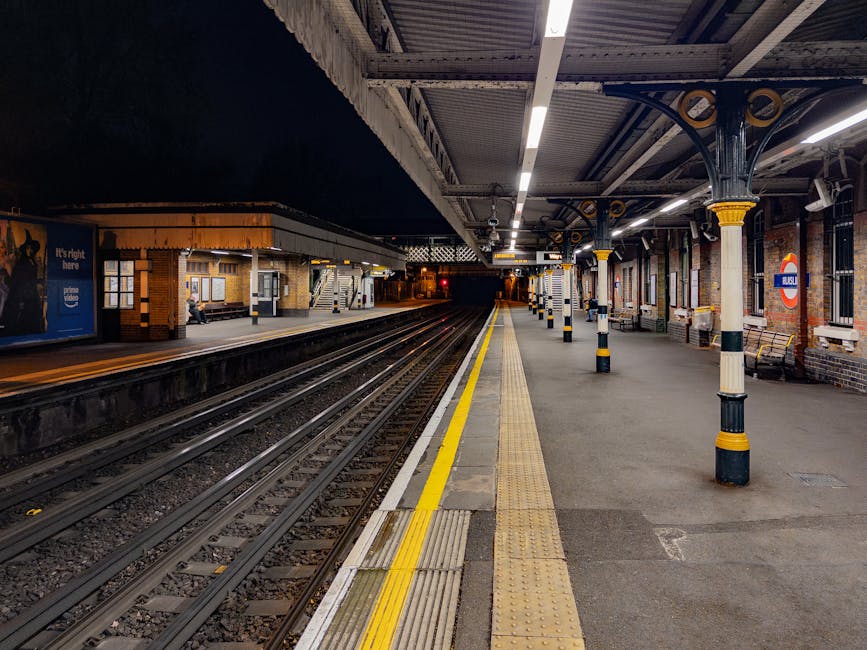
Anerley station delays access tips for Crystal Palace removals
Posted on 01/07/2026
If you are planning a move around Crystal Palace and your route passes near Anerley station, even a short delay can throw the whole day off. Trains running late, platform congestion, roadworks, or a blocked loading bay can all turn a tidy timetable into a messy one. That is exactly why Anerley station delays access tips for Crystal Palace removals matter: they help you move smarter, protect your schedule, and keep the team calm when the day does not go perfectly to plan.
This guide walks through what those delays mean in real life, how access issues affect a removal, and what you can do before moving day to avoid last-minute stress. You will find practical steps, local-style advice, a comparison of move options, and a simple checklist you can actually use. Nothing fluffy. Just the stuff that helps when the van is waiting and the clock is doing its thing.

Why Anerley station delays access tips for Crystal Palace removals Matters
Crystal Palace removals can be straightforward on paper and complicated in practice. A move might start with a clear route, then suddenly you are dealing with a delayed train arrival, slower-than-expected access from the station side streets, or a lift that is already in use. Around Anerley station, that matters because the local road layout and rail activity can create pinch points at the exact moment you need free movement for boxes, furniture, or a van.
Removal jobs rely on timing more than most people think. If the team arrives early but cannot park where planned, or if your keys are delayed by a late arrival from the station, the whole chain slips. One small delay becomes three. That is why access planning is not just a nice extra; it is part of the move itself.
For people moving into or out of flats, converted houses, and shared homes in Crystal Palace, the pressure can be even higher. Narrow entrances, limited kerb space, and shared hallways make a poorly timed arrival harder to absorb. To be fair, most moves are not ruined by one issue. They are stressed by three or four little ones that stack up. The good news? Most of them are avoidable.
If you are already thinking about packing and route planning, it can help to look at broader moving support too, such as the full range of moving services available in Crystal Palace or a more hands-on option like man and van support for local moves. Those pages are useful when you want to match the service to the access situation rather than force the move into one size.
How Anerley station delays access tips for Crystal Palace removals Works
At a practical level, this topic is about planning around two linked problems: transport delays near the station and physical access challenges at the property. If the station area is busy, your collection window may compress. If the property access is awkward, the time you lose is often spent on carrying items further, waiting for a parking space, or navigating stairs with awkward furniture.
The logic is simple. Build a move plan around the most constrained part of the route, not the easiest. If you know the station side of the move can be slow, then the packing order, vehicle size, arrival time, and key handover all need to reflect that. It is a bit unglamorous, but it works.
Here is how the delay problem usually shows up:
- Transport delay: someone is late arriving by rail or road, which pushes key collection or load-in later.
- Kerbside delay: the van cannot stop where expected, so loading takes longer.
- Building access delay: lifts, entry codes, or shared doors slow the moving crew down.
- Route delay: road congestion, temporary works, or pedestrian bottlenecks near the station create a knock-on effect.
When a move team is experienced locally, they will usually adjust on the fly. But the best moves do not depend on improvisation alone. A decent plan gives you room to breathe. And honestly, moving day is much nicer when nobody is rushing up and down stairs with a sofa that does not want to cooperate.
Key Benefits and Practical Advantages
Planning for station delays and access issues does more than save time. It protects the whole shape of the move. That may sound a bit dramatic, but anyone who has watched a move unravel because the van arrived before the keys can tell you it is true.
- Less waiting around: the team can work to a realistic arrival window rather than an optimistic guess.
- Fewer missed handovers: if keys or access codes are delayed, you still have a buffer.
- Lower handling risk: fewer hurried lifts and fewer awkward last-minute carries.
- Better vehicle choice: you can select a van size that suits the access route, not just the volume of items.
- Smoother communication: everyone knows who is arriving, when, and by which entrance.
There is also a stress benefit that people underestimate. A move with a clear access plan feels calmer, even when something small goes wrong. You are not scrambling to invent a backup. You already have one.
For larger household moves, it can be worth comparing house removals in Crystal Palace with smaller-load options like a removal van service or man with van support. Different access conditions suit different setups, and the right fit can save both time and money.
Who This Is For and When It Makes Sense
This guide is for anyone moving in or around Crystal Palace who may need to pass through Anerley station-adjacent routes, particularly if timing is tight. That includes flat moves, student moves, family homes, shared houses, and smaller office relocations where parking and access are more fiddly than the inventory itself.
It makes especially good sense if:
- your move depends on public transport arrivals;
- you are collecting keys from an agent or landlord at a fixed time;
- you live in a flat with narrow stairs or a shared entrance;
- the van needs to park close to the door;
- you are moving on a busy weekday or during school-run hours;
- you have fragile, heavy, or awkward items that cannot be rushed.
Students moving into rentals around the area often benefit from simple planning and a smaller vehicle. So do people leaving a first-floor flat with no lift. In those cases, the delay is rarely about the total distance. It is about the last 50 metres. That bit can be surprisingly stubborn.
If you are moving into a smaller property, the flat removals service can be a useful reference point, while families with more furniture may prefer dedicated furniture removals. If timing is genuinely tight, same day removals may also be worth considering, though only if the access plan is solid.
Step-by-Step Guidance
Here is a practical way to plan a move when station delays and access issues could interfere. Keep it simple. Overcomplicating this rarely helps.
- Map the route and the entrance. Work out exactly where the van will stop, which entrance will be used, and whether there is any one-way traffic or narrow turning point on the final approach.
- Check timing against the station. If someone is arriving by train, add a buffer. Not a fantasy buffer. A real one. Ten minutes often becomes twenty if the platform is busy or the walk is slower than expected.
- Confirm access details in writing. Entry codes, concierge instructions, parking notes, and stair access should all be shared before the day.
- Pack by access priority. Keep the first-load boxes and essential items near the exit. The less wandering around on the day, the better.
- Reserve enough space near the property. If parking is tight, think ahead about whether a smaller vehicle or split load makes more sense.
- Assign one person to be the contact point. Too many instructions from too many people slows everything down. One lead contact is enough.
- Prepare for handover delays. If keys are late, have a fallback: tea, charging cables, a tidy waiting space, and a phone battery that is not already clinging on by a thread.
- Load in the right order. Heavy, stable furniture first; boxes that need to stay upright next; delicate items last, unless your mover advises otherwise.
There is a quiet little trick that helps a lot: photograph the access route in daylight the day before. Stairs, gates, hall widths, awkward corners. A picture often reveals the problem faster than memory does.
For packing support, you may also want to read about packing and boxes in Crystal Palace. It is one of those topics that seems dull until you realise the wrong box size can make a narrow stairwell feel even narrower. Funny how that happens.
Expert Tips for Better Results
After enough local moves, a few patterns become obvious. The best ones are not the flashiest ones. They are the calm, practical ones that remove friction before it starts.
- Move early if the route is sensitive. A morning start usually gives you more slack if travel near the station is slower than expected.
- Keep essentials separate. A kettle, documents, chargers, medication, and one change of clothes should not be buried under the sofa cushions.
- Use smaller loads where access is poor. If the entrance is awkward, several lighter trips may beat one oversized load.
- Tell the mover about every obstruction. Bikes, bins, low branches, tight turns, and limited lifts all matter.
- Give yourself one spare decision. For example, a backup parking plan or a backup handover contact. Just one. It makes the day feel less brittle.
Another useful tip: if you are combining moving day with furniture dismantling, ask the crew in advance what needs to be disassembled before arrival. That one detail often saves 20 minutes or more. And 20 minutes is a long time when everyone is standing in a hallway pretending not to be stressed.
People sometimes ask whether a larger team is always better. Not necessarily. In a compact property with awkward access, too many people can get in each other's way. The right team size is the one that fits the property and the time window, not the one that looks impressive on paper.

Common Mistakes to Avoid
The most common mistakes are usually simple ones. Not dramatic. Just costly in the way moving-day mistakes tend to be.
- Assuming station delay is minor. Ten minutes becomes thirty very easily.
- Not checking access at the property. A move can be delayed by one locked gate or one missing fob.
- Booking a vehicle that is too large. A van that cannot park properly is no bargain at all.
- Leaving packing until the morning. That turns the move into a race.
- Forgetting to brief the mover on awkward items. Pianos, mirrors, and oversized wardrobes need special handling.
- Relying on one person for everything. If that person is late, the whole process stalls.
One thing that catches people out near station-adjacent areas is assuming there will be space right outside the building. Sometimes there is. Sometimes there really, really isn't. Better to prepare for a short carry than discover it mid-move with a heavy table and a mildly cursed expression.
If you are moving valuable or awkward items, take a look at piano removals in Crystal Palace and insurance and safety guidance. Even if you are not moving a piano, those pages remind you how much care heavy items actually need.
Tools, Resources and Recommendations
You do not need fancy technology to organise this well, but a few simple tools can make a real difference.
- Phone notes or a shared checklist: good for entry codes, parking instructions, and contact names.
- Messaging app group: useful when more than two people are involved.
- Photo folder: keep pictures of access routes, parking signs, and any building restrictions.
- Floor plan or room labels: helps the crew place boxes faster.
- Labels by priority: use clear marks for fragile, essential, and storage items.
For more general service planning, the removals Crystal Palace page is a helpful starting point, while removal services in Crystal Palace can give you a better sense of what kinds of support are available across different move sizes.
If sustainability matters to you, you might also find recycling and sustainability guidance useful, especially when deciding what to keep, donate, reuse, or send to storage. That can trim the load a bit. Less load, less chaos. Nice and simple.
Law, Compliance, Standards, or Best Practice
For removals, the safest approach is to follow accepted UK moving best practice rather than making assumptions on the day. That means checking parking restrictions, respecting building rules, not blocking access routes, and handling items in a way that reduces the risk of damage or injury.
Where a building has shared access, landlords, agents, or managing teams may have their own rules about moving hours, lift protection, or route use. Those rules are not decoration. They matter. If you ignore them, you can create delays, complaints, or avoidable damage.
Health and safety should stay practical, not theatrical. Clear walkways, sensible lifting, good footwear, and honest communication about heavy items usually prevent more problems than any last-minute scramble. If you want to see how a professional approach is framed, the health and safety policy and terms and conditions are worth reviewing before booking.
For accessibility needs, it is also sensible to check how the mover handles different property types, stairs, and alternative access arrangements. That is where accessibility information becomes genuinely useful rather than just a formality.
Options, Methods, or Comparison Table
Not every Crystal Palace move needs the same setup. The best choice depends on access, timing, item volume, and how much carrying is involved. Here is a straightforward comparison.
| Option | Best for | Access fit | Typical advantage | Watch out for |
|---|---|---|---|---|
| Man and van | Smaller homes, short-distance moves | Good when parking is manageable | Flexible and cost-effective | Can struggle if the load is larger than expected |
| Removal van service | Mid-size moves or multiple trips | Useful where access is limited but organised | Balances capacity and manoeuvrability | Needs careful loading order |
| House removals | Full-property moves | Best with a clear access plan | More complete support for larger jobs | Can be delayed by poor coordination |
| Storage plus move | Staggered moves or uncertain handovers | Helpful if station delays affect timing | Takes pressure off same-day completion | Requires extra planning and coordination |
In a tight-access situation, a smaller vehicle and a more flexible schedule often win out over a big, rigid setup. That is especially true if you are dealing with stairs, uncertain key handover, or a route that crosses busier local streets near Anerley station.
Case Study or Real-World Example
Here is a realistic example from a Crystal Palace flat move. The occupants had a rail arrival planned for early morning, with the van due shortly after. The access route looked simple enough: short walk from the station area, one parking stop outside the building, two flights of stairs, done.
Then the train was delayed. Not badly, just enough. The van arrived first and had to wait for the keys. At the same time, another resident needed access through the shared entrance, which added a few more minutes. Nothing disastrous, but the day began to fray.
The team recovered the situation by doing three things well: they used the waiting time to stage boxes by priority, they confirmed the exact parking spot before unloading, and they loaded heavy items only once the key holder arrived. The move still took longer than planned, but it stayed orderly. Nobody was dragging furniture in a panic. That mattered more than shaving off a few minutes.
The neat lesson? Delays are manageable when access is planned as part of the move, not treated as a side issue.
Practical Checklist
Use this checklist the day before and again on the morning of the move.
- Confirm the van arrival time and add a buffer for station delays.
- Share entry codes, keys, and contact numbers with everyone involved.
- Check whether parking is available close to the property.
- Photograph stairs, entrances, and any tight corners.
- Label fragile, essential, and storage items clearly.
- Pack a first-night box with chargers, toiletries, and documents.
- Make sure large furniture is dismantled if needed.
- Tell the mover about lifts, restricted access, or shared entrances.
- Keep your phone charged and easy to reach.
- Have a backup plan if someone is late from the station.
Quick summary: if the access route is tight, the move needs more clarity, not more guesswork. Keep the communication simple, the packing organised, and the timing generous where you can. That tends to work best.
If you are still comparing service types, man and a van Crystal Palace and man and van Crystal Palace are useful pages to weigh against a fuller removal company approach. The right choice depends on how awkward the access really is.
Conclusion
Anerley station delays do not have to derail a Crystal Palace move. If you plan the route, build in time, understand the property access, and choose the right moving setup, you can absorb most delays without the day turning into a scramble. The key is to treat access as part of the move strategy, not just a detail you sort out later.
For many local moves, the difference between stress and smooth progress is surprisingly small. A few extra minutes. A clearer handover note. A better van choice. That is often enough. And honestly, when the boxes are stacked neatly and the first kettle boils in the new place, the whole thing feels a lot more manageable.
Get a free quote today and see how much you can save.
However your move unfolds, a thoughtful start usually makes the finish feel much kinder.